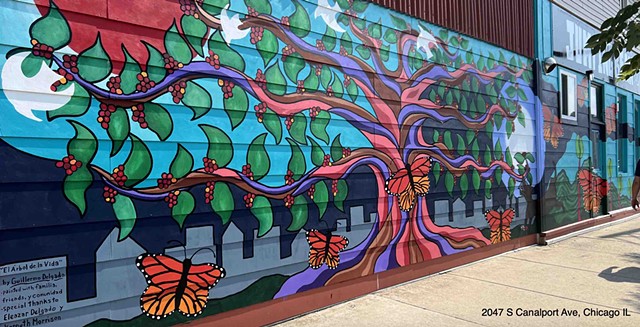
Guillermo Delgado is an interdisciplinary artist and educator whose teaching spans art, poetry, community engagement, and contemplative walking. Wherever he works, he creates safe, accessible, and mindful spaces for learning and artmaking.
Delgado didn't set out to become an artist or an educator. Both grew out of how he liked to pass the time, drawing and listening to other people's histories and stories, and out of needing a way to hold what he was carrying: a childhood split between Chicago's Little Village and summers in Monterrey, Mexico, and everything that comes with living between two cultures, two languages, and two ways of seeing. That in-betweenness still shapes his work. His paintings and creative writing come from a single practice: a haiku can start a painting, and a painting can leave him with a line he has to write down. Influence arrives from everyday life as readily as from the arts. A sunset, the drift of clouds, or the song of a bird can set a piece in motion, alongside dreams, the spirit world, and the music and graphic traditions he grew up around.
Since 2014, Delgado has facilitated creative workshops in Michigan men's correctional facilities and at the juvenile detention center in Lansing. Storytelling through songwriting is a more recent turn. He earned a songwriting certificate from Interlochen in 2016, and in the spring before the pandemic he began Soñando en Español, a quest to reclaim his maternal language and dream in Spanish again through reading and creative writing. The project remains a major influence on his creative practice.
In an earlier life, he was a magician, a deejay for hire, and a bicycle messenger in Chicago.
𝘐'𝘮 𝘯𝘰𝘵 𝘴𝘢𝘺𝘪𝘯𝘨 𝘢𝘳𝘵 𝘸𝘪𝘭𝘭 𝘴𝘢𝘷𝘦 𝘺𝘰𝘶, 𝘣𝘶𝘵 𝘢𝘴 𝘩𝘶𝘮𝘢𝘯𝘴 𝘸𝘦 𝘯𝘦𝘦𝘥 𝘩𝘰𝘱𝘦 𝘵𝘰 𝘴𝘶𝘳𝘷𝘪𝘷𝘦 𝘢𝘯𝘥 𝘵𝘩𝘳𝘪𝘷𝘦. 𝘈𝘳𝘵 𝘪𝘴 𝘩𝘰𝘱𝘦, 𝘢𝘯𝘥 𝘩𝘰𝘱𝘦 𝘭𝘦𝘵𝘴 𝘶𝘴 𝘪𝘮𝘢𝘨𝘪𝘯𝘦 𝘴𝘰𝘮𝘦𝘵𝘩𝘪𝘯𝘨 𝘣𝘦𝘵𝘵𝘦𝘳 𝘧𝘰𝘳 𝘰𝘶𝘳𝘴𝘦𝘭𝘷𝘦𝘴 𝘢𝘯𝘥 𝘧𝘰𝘳 𝘵𝘩𝘦 𝘸𝘰𝘳𝘭𝘥. 𝘈𝘳𝘵 𝘣𝘶𝘪𝘭𝘥𝘴 𝘣𝘳𝘪𝘥𝘨𝘦𝘴 𝘣𝘦𝘵𝘸𝘦𝘦𝘯 𝘶𝘴 𝘢𝘭𝘭.